

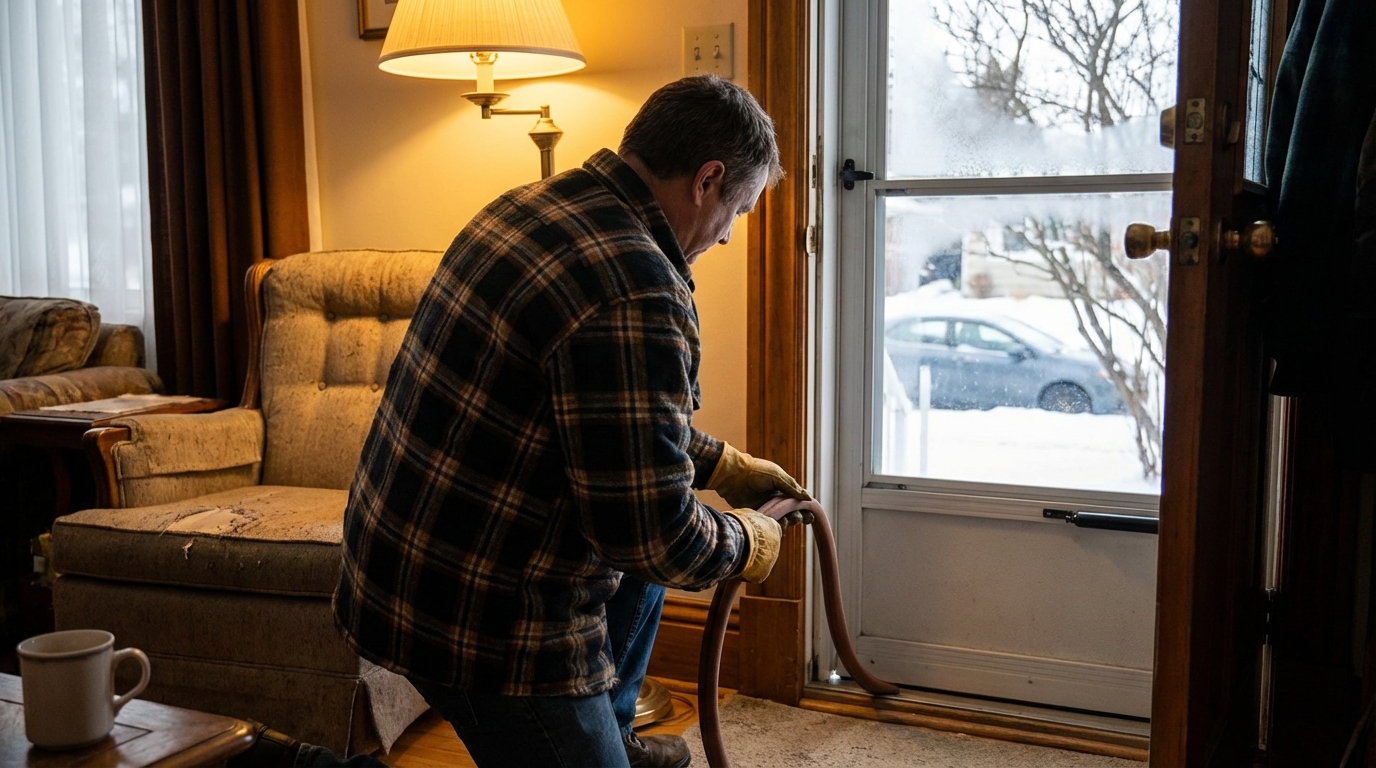
UK winters may be milder than many assume, but damp, draughts, and frozen pipes cause significant damage and discomfort every year — particularly in older Victorian and Edwardian properties that were never designed for modern heating standards. A systematic winterproofing check before October can save hundreds in heating costs and prevent expensive repairs. This room-by-room checklist covers everything from loft insulation to boiler servicing.
The Biggest UK Winter Risks
Burst pipes (frozen and then thawed) cause an estimated £1.8 billion in insurance claims annually in the UK. Condensation and damp — exacerbated by poor ventilation and inadequate heating — affect around 4 million UK homes and create conditions for mould growth. Most of these problems are preventable with a pre-winter check.
Heating System
- Boiler service: Annual gas boiler service by a Gas Safe registered engineer (~£70–£100). Ensures efficiency and safety. Required to maintain most boiler warranties.
- Bleed radiators: If radiators have cold spots at the top, trapped air is reducing efficiency. Use a radiator key to bleed them — takes 2 minutes per radiator.
- Check TRV settings: Thermostatic radiator valves should be at comfortable settings. Don't turn them to zero in unused rooms — 1–2 prevents freezing.
- Programme your thermostat: Set your heating to come on before you wake. 18–21°C living areas; 16–18°C bedrooms. Each degree above 21°C can add approximately 10% to heating bills (industry estimate; actual savings vary by boiler efficiency and insulation).
- Pipe lagging: Insulate exposed pipes in unheated spaces (loft, garage, under floors) with foam lagging. Critical for preventing burst pipes.
Loft and Insulation
- Loft insulation should be 270mm deep (recommended current standard). If it's less than 100mm, topping it up could save £150/year in heating costs.
- Check for gaps around loft hatches — add draught strips and insulate the hatch itself.
- Ensure no insulation is blocking roof eaves vents — ventilation prevents condensation in roof space.
Draught-Proofing
Draughts through windows, doors, letterboxes, and floorboards can account for up to 25% of heat loss in older properties, according to Energy Saving Trust estimates. Fixes:
- External doors: Add or replace door brush strips at the bottom. Use compression seals around the frame. Cost: £5–£30 per door.
- Windows: Add draught strips to sash windows and casement windows where there are gaps. Secondary glazing film can significantly reduce heat loss through single-glazed windows for under £20 per window.
- Chimneys (not in use): A chimney balloon blocks cold air from coming down. Remove before lighting a fire.
- Floorboards: Use draught excluder strips between floorboards or skirting boards in draughty rooms.
Plumbing and Pipes
- Know where your stopcock (mains water shut-off) is. Test it turns on and off.
- Lag any exposed outdoor pipes or pipes in unheated areas with foam pipe lagging.
- If going away for more than a few days in winter, set heating to 7°C frost protection mode — do not turn it off completely.
- Check outdoor taps: turn off at the indoor isolating valve and drain them.
Roof and Gutters
- Clear gutters of leaves and debris before November — blocked gutters overflow against walls, causing damp penetration.
- Check for missing or slipped roof tiles — a roofer can do a visual inspection for ~£50–£100.
- Check flashings around chimney stacks and roof junctions for gaps.
| Task | DIY or Tradesperson | Typical Cost | Savings Potential |
|---|---|---|---|
| Boiler service | Gas Safe engineer | £70–£100 | Safety + efficiency |
| Bleed radiators | DIY | £5 (radiator key) | Up to 15% heating efficiency improvement (estimate) |
| Door draught strips | DIY | £15–£30 | £25–£50/year |
| Loft insulation top-up | DIY or professional | £300–£500 (or free via GBIS) | £150/year |
| Pipe lagging | DIY | £20–£50 | Prevents burst pipe damage |
| Gutter clearing | Professional | £50–£150 | Prevents damp |
October Checklist
Book boiler service. Bleed all radiators. Check and replace door/window draught strips. Clear gutters. Lag exposed pipes. Check loft insulation depth. Locate and test your stopcock. Set thermostat programming for winter schedule. Check smoke and CO alarms. These tasks take one weekend and could save hundreds over the winter.