

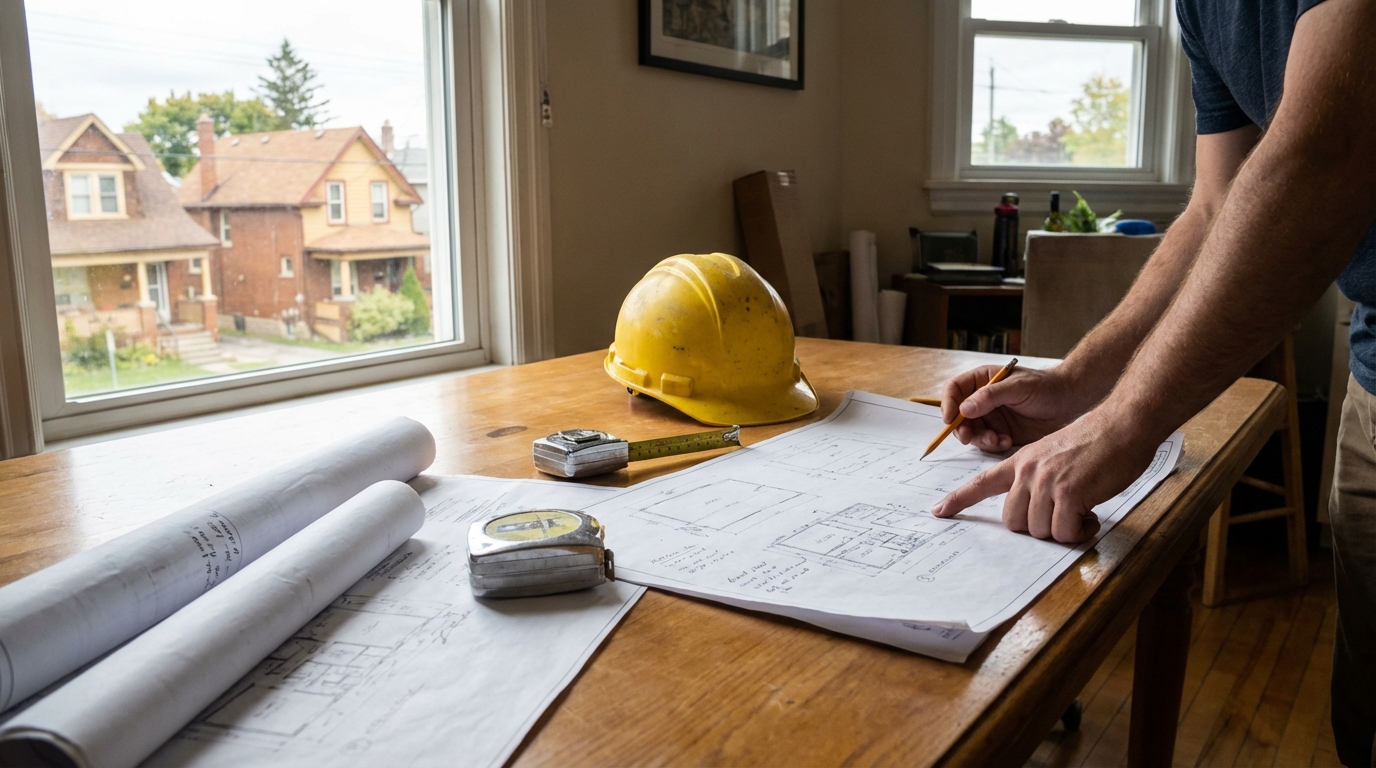
Homeowners in the UK are often surprised to discover how much of what they plan to do requires either planning permission, Building Regulations approval, or both — and how much is actually permitted without any approval under "permitted development rights." Getting this wrong is costly: an unapproved extension discovered during a house sale can kill the transaction, and local authorities can require you to demolish or alter unlawful works at your own expense. This guide explains the key distinctions.
The Two Separate Systems
Many homeowners confuse planning permission (controls what you build, its size, and how it affects neighbours/character of area) with Building Regulations approval (controls how it's built — structural integrity, fire safety, insulation, electrics). You may need one, both, or neither for a given project.
Permitted Development Rights (PDR)
Many common home improvements do not require a planning application — they are "permitted development." Key permitted development rights for houses (not flats or listed buildings) include:
- Single-storey rear extensions: Up to 6m from original rear wall (semi-detached/terraced) or 8m (detached). Subject to height limits and neighbour notification.
- Loft conversions: Up to 40m³ additional roof space (semi/terraced) or 50m³ (detached). No front roof extension visible from highway.
- Outbuildings: Single-storey outbuildings up to 4m height (dual-pitched) or 3m (any other roof), within 50% of total garden area.
- Internal alterations: Most internal work including removing non-structural walls (Building Regulations may still apply).
Important: PDR may be removed by an Article 4 Direction in conservation areas, national parks, or for listed buildings. Always check with your local planning authority before starting work.
When You Need Planning Permission
| Project | Planning Permission | Building Regulations |
|---|---|---|
| Single-storey rear extension (within limits) | Permitted Development (notify neighbours) | Yes |
| Two-storey extension | Yes (planning application required) | Yes |
| Loft conversion (within limits) | Permitted Development | Yes |
| Garage conversion | Usually Permitted Development | Yes |
| New driveway (non-permeable) | May require planning | No |
| Solar panels | Usually Permitted Development | Notify Building Control |
| Change of use (e.g. house to HMO) | Yes | Yes |
| New windows/doors (replacement) | No (like-for-like) | FENSA/CERTASS notification |
Building Regulations: What They Cover
Building Regulations approval is required for most structural work, new electrics in kitchens/bathrooms, extensions, conversions, and new boiler installations. You can use either:
- Full Plans application: Submit plans to Local Authority Building Control (LABC) before work starts. Inspections during and at completion.
- Building Notice: Simpler notification process without full plans. Work can start immediately.
- Approved Inspectors: Private approved inspectors as an alternative to LABC.
Always obtain a Completion Certificate when work is done — this is essential for house sale. Competent Person Schemes (Gas Safe for gas work, NICEIC for electrics) allow tradespeople to self-certify without a Building Regulations application.
Before You Start
Use the Planning Portal (planningportal.co.uk) to check if your project requires planning permission. Contact your Local Authority Building Control (LABC) team to discuss Building Regulations requirements. Obtain a Lawful Development Certificate (LDC) from your council for permitted development work — it costs ~£100–£200 but provides legal proof of lawfulness, which is valuable when selling. Check if your property is in a conservation area or listed building — restrictions are significantly tighter.