

UK households face some of the highest energy costs in Europe, and the government has introduced several overlapping schemes to help homeowners and renters improve energy efficiency. Understanding which scheme you're eligible for — and how they interact — can make the difference between a free upgrade and paying thousands out of pocket. This guide covers the main 2026 programmes: ECO4, the Great British Insulation Scheme (GBIS), the Boiler Upgrade Scheme (BUS), and EPC requirements.
The EPC Problem
An estimated 60% of UK homes have an Energy Performance Certificate (EPC) rating of D or below (based on publicly available EPC register data; actual figures vary by region and property type). From 2028, landlords in England may be required to achieve EPC C for new tenancies. Homeowners selling properties below EPC C face growing buyer resistance and reduced valuations in some markets. Acting now on energy efficiency is increasingly both a financial and regulatory imperative.
ECO4 (Energy Company Obligation)
ECO4 is funded by major energy suppliers and provides free energy efficiency improvements to low-income and vulnerable households. It runs until March 2026. Eligible measures include:
- Cavity wall insulation
- Solid wall insulation (external or internal)
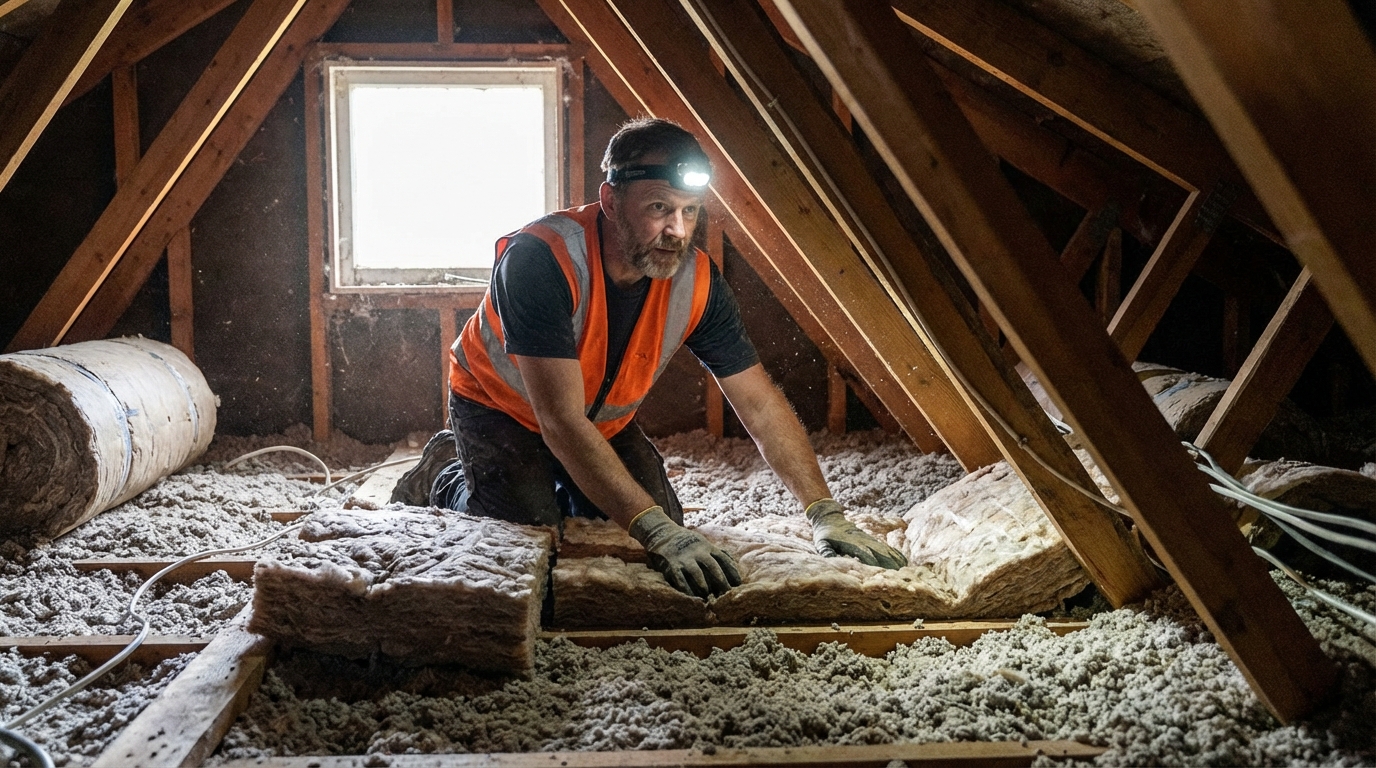
- Loft insulation
- Air source heat pumps
- First-time central heating systems
Eligibility: households on means-tested benefits (Universal Credit, Pension Credit, etc.) or in homes rated EPC D–G with a low income indicator. Apply through your energy supplier or via GOV.UK.
Great British Insulation Scheme (GBIS)
GBIS extends support beyond ECO4's income criteria to include a broader group of homes in EPC bands D–G. Funding comes from energy suppliers. The scheme covers loft insulation, cavity wall insulation, and some solid wall insulation. You may qualify without receiving means-tested benefits — eligibility is based on EPC rating and sometimes council tax band. Check at GOV.UK.
| Scheme | Who Qualifies | What's Funded | Cost to Homeowner |
|---|---|---|---|
| ECO4 | Low income / benefits recipients, EPC D–G | Insulation, heat pumps, heating | Free (fully funded) |
| GBIS | EPC D–G homes (broader criteria) | Loft and cavity wall insulation | Free or subsidised |
| Boiler Upgrade Scheme | Any homeowner in England/Wales | Heat pump or biomass boiler | £7,500 grant off cost |
| Home Upgrade Grant | Off-gas-grid low income homes | Insulation, heat pumps | Free or subsidised |
Boiler Upgrade Scheme (BUS)
The BUS provides a £7,500 grant toward an air source heat pump or biomass boiler for homes in England and Wales. The property must have adequate insulation (EPC of at least D, and loft/cavity insulation where possible). The grant is paid directly to the installer. Find an MCS-certified installer at mcscertified.com. Note: heat pump installation typically costs £8,000–£15,000 before the grant.
Understanding EPC Ratings
Every residential property sold or let must have a valid EPC (valid for 10 years). The scale runs from A (most efficient) to G (least efficient). The average UK home is rated D. Common improvements and their typical EPC impact:
- Loft insulation: +1 band (D to C possible for ~£300–£400)
- Cavity wall insulation: +1 band (~£400–£600 or free under ECO4/GBIS)
- Double glazing throughout: +0.5–1 band (~£5,000–£10,000)
- Replacing gas boiler with heat pump: +1–2 bands (£8,000–£15,000 before BUS grant)
- Solar panels: +1 band (~£5,000–£8,000 installed)
First Step: Get Your EPC Updated
If your property's EPC is more than 5 years old, commission a new one (£60–£120). The EPC report includes a tailored recommendations list with estimated costs and savings for each improvement. Cross-reference with your eligibility for ECO4 or GBIS before paying for any work privately — you may qualify for free insulation. Check eligibility at simpleenergyadvice.org.uk.